
sikkim state aids control society

The Global HIV/AIDS Epidemic

HIV, the virus that causes AIDS, is one of the world’s most serious public health challenges.

But there is a global commitment to stopping new HIV infections and ensuring that everyone with HIV has access to HIV treatment.

HIV Treatment Access — As of the end of 2020, 27.4 million people with HIV (73%) were accessing antiretroviral therapy (ART) globally. That means 10.2 million people are still waiting. HIV treatment access is key to the global effort to end AIDS as a public health threat. People with HIV who are aware of their status, take ART daily as prescribed, and get and keep an undetectable viral load can live long, healthy lives and have effectively no risk of sexually transmitting HIV to their HIV-negative partners.

Breakfree from fear, stigma, and confusion. Get guided support to assess your risk, for HIV and Sexually Transmitted Infection testing, counselling and treatment—right when you need it, wherever you are

About us

who we are?

Sikkim State AIDS Control Society (SSACS) was established back in April, 1999 with a goal to halt and reverse the epidemic of AIDS. While we function as per the guidelines of National AIDS Control Programme (NACO), we have also established Targeted Intervention Programmes which is implemented through the help of local NGOs.

major updates

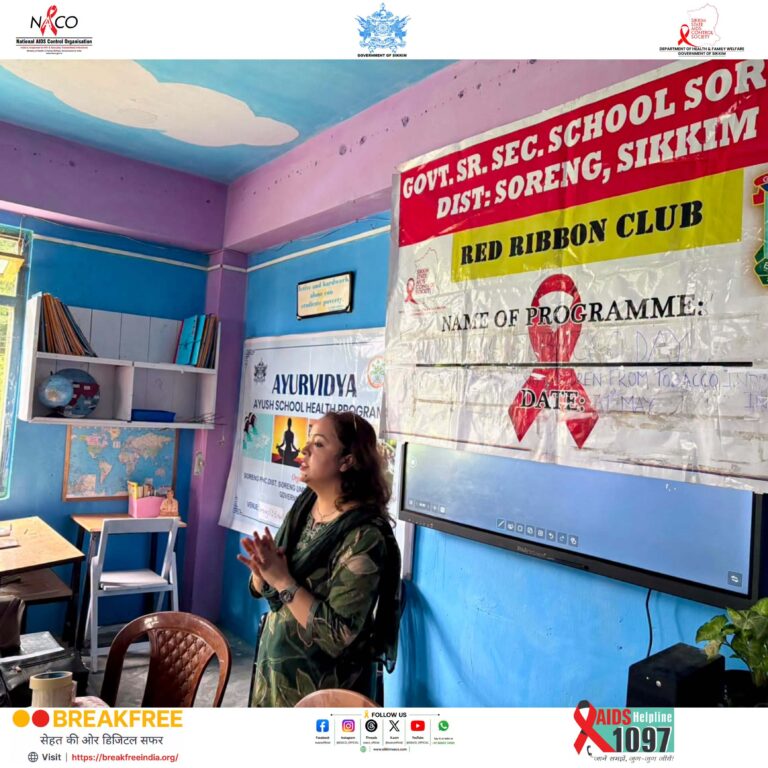
ICTC Awareness Programme at P.M. Shri Govt. Sr. Sec. School, Soreng

The Red Ribbon Club of P.M. Shri Govt. Sr. Sec. School, Soreng, organised an ICTC Awareness Programme today with great enthusiasm and active participation from our students. The programme featured an...
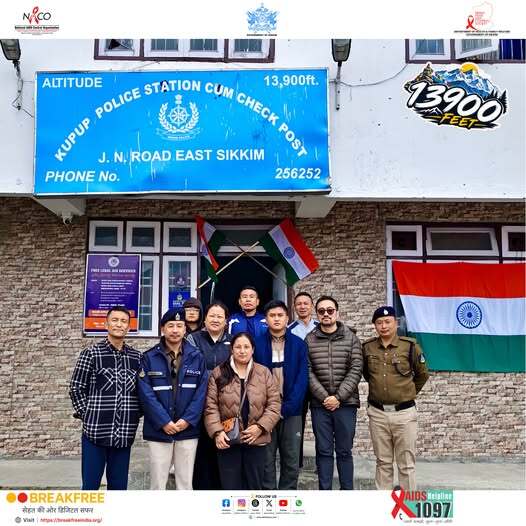
Integrated Health Campaign at Kupup & Gnathang

At an altitude of over 13,900 feet, an Integrated Health Campaign was conducted at Kupup and Gnathang, East Sikkim, under the theme “My Health, My Wealth.” Organised by Nivasa Rehabilitation &...
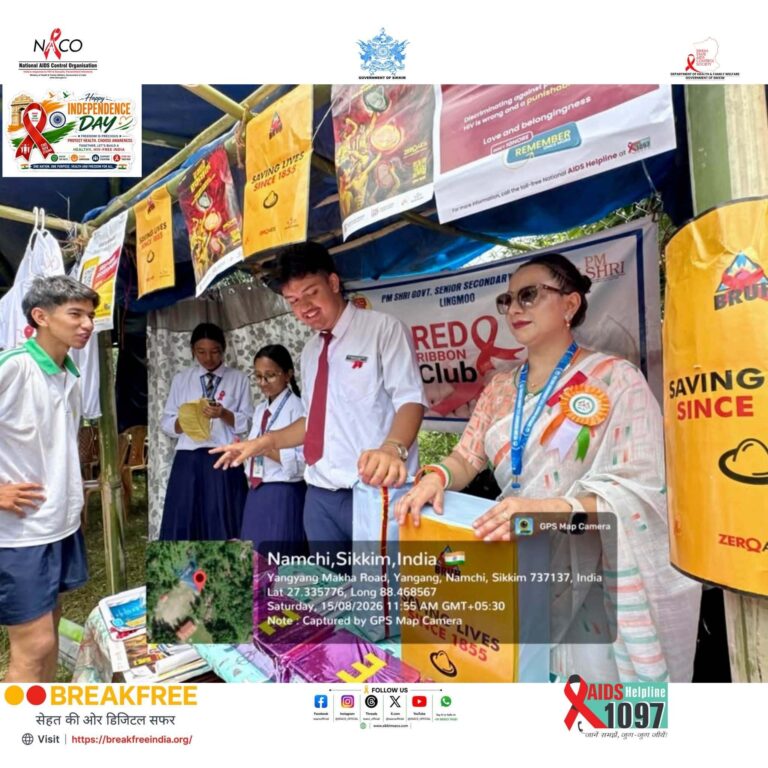
80TH INDEPENDENCE DAY CELEBRATION

The Red Ribbon Club (RRC) of PM SHRI Government Senior Secondary School, Lingmoo Kolthang proudly participated in the 80th Independence Day Celebration with great enthusiasm and commitment towards...
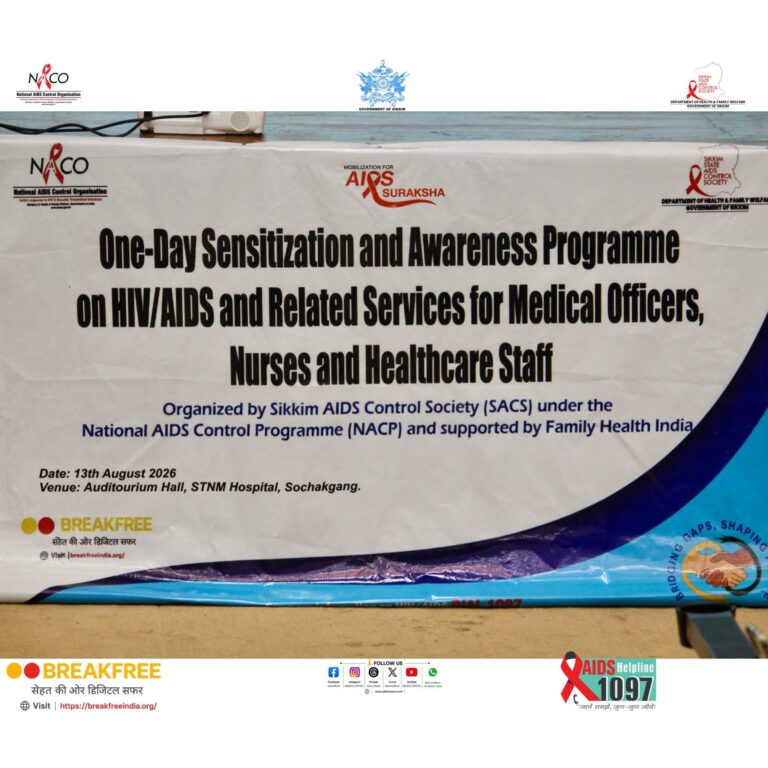
One-Day Sensitization & Awareness Programme on HIV/AIDS

Sikkim AIDS Control Society (SACS), under the National AIDS Control Programme (NACP), with support from Family Health India, organized a One-Day Sensitization and Awareness Programme on HIV/AIDS and...
TENDER AND NOTice

what we do?

In 1992, the Government of India launched the first National AIDS Control Programme (NACP-I) which was implemented during 1992-1999 with an objective to slow down the spread of HIV infections, so as to reduce, morbidity and mortality and impact of AIDS in the country.

While the vast majority of HIV infections in India are attributed to the sexual route of transmission, we are mindful that the transfusion of unsafe blood and blood products account for 2.07 percent of the HIV infections in the country in 2004-2005.  Access to safe blood is maintained by law, and is the primary responsibility of NACO. 

The state has one Anti Retroviral Therapy Centre (ART) housed at the Sikkim SACS building, Near STNM Hospital Complex, Gangtok. Patients from different districts are registered and followed up with clinical assessment and CD4 counting.

Red Ribbon is the symbol of solidarity, hope and support for those living with HIV. It is also a symbol for the continuing education to those who are not infected and for maximum efforts to find treatment. Most significantly it is the symbol if awareness for HIV/AIDS.

hiv aids by the numbers

The pace of progress in reducing new HIV infections, increasing access to treatment and ending AIDS-related deaths is slowing down. See the latest data on HIV.

MILLION PEOPLE
0

People were newly infected with HIV in 2019

MILLION PEOPLE
0

People were living with HIV

THOUSAND
0

People died of AIDS-related illnesses

let's stop hiv together

our mission

Our mission and priority lie in providing the high-risk population (Female Sex Workers -FSW, Male Having Sex with Male-MSM and Injecting Drug Users – IDUs) with the information, means and skills they need to minimise HIV transmission and improving their access to care, support and treatment.